
Kenya ranked world's second-riskiest democracy for election violence

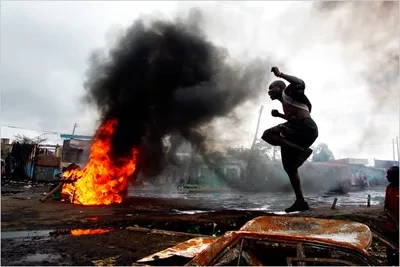
Kenya has been ranked the second-most vulnerable democracy to electoral violence ahead of the 2027 General Election, according to the latest Electoral Vulnerability Index released by the Kofi Annan Foundation.

The report places Kenya behind only Nigeria among the top 10 democracies considered to be at the highest risk of election-related violence during the 2026–2027 electoral cycle.
Kenya recorded a risk index of 43.9, with the foundation projecting an 81.6 per cent likelihood of electoral violence.
The report also estimates a 6.2 per cent probability of severe violence and a 75.4 per cent likelihood of moderate violence.
Overall, the Foundation estimates an 84.1 per cent probability that Kenya could experience some form of electoral violence during the 2027 polls, underscoring the need for early preventive measures, dialogue and institutional preparedness.
The ranking comes at a time when political activity is intensifying across the country as parties position themselves ahead of the 2027 elections.
Campaigns, coalition-building, and by-elections have already heightened political temperatures, raising concerns among governance experts about safeguarding peaceful political competition.
Kenya's inclusion is high on the list, reviving painful memories of the 2007–2008 post-election violence, one of the country's darkest periods.
The unrest erupted following the disputed December 2007 presidential election in which the Electoral Commission declared late President Mwai Kibaki the winner over opposition leader Raila Odinga.
Allegations of electoral fraud sparked widespread protests that quickly escalated into violence across several parts of the country.
The violence, which assumed political and ethnic dimensions in many areas, claimed the lives of more than 1,100 people and displaced an estimated 600,000 others, according to official and international reports.
Homes, businesses and public infrastructure were destroyed, particularly in the Rift Valley, Nairobi, Nyanza and parts of Western and Coast regions, leaving thousands in need of humanitarian assistance.
The crisis was eventually resolved through mediation led by former United Nations Secretary-General Kofi Annan under the African Union Panel of Eminent African Personalities.
The negotiations culminated in the signing of the National Accord and Reconciliation Act in February 2008, establishing a Grand Coalition Government with Mwai Kibaki as President and Raila Odinga as Prime Minister.
The aftermath of the violence prompted sweeping institutional reforms, including the promulgation of the Constitution of Kenya, 2010, changes to the electoral management body, judicial and police reforms, and the establishment of institutions aimed at promoting national cohesion and reconciliation.
Successive elections have also seen increased investment in election preparedness, conflict monitoring and peace campaigns.
However, the latest Kofi Annan Foundation index suggests that significant vulnerabilities remain.
The report is likely to renew calls on political leaders, the Independent Electoral and Boundaries Commission (IEBC), security agencies, civil society and religious organisations to work together to ensure the 2027 General Election is peaceful, credible and transparent.
According to the index, Nigeria tops the global ranking with a risk index of 52.5 and a projected 90.5 per cent likelihood of electoral violence. Kenya is followed by Fiji, Mongolia, Guatemala, Gambia, Armenia, Lesotho and Brazil among the democracies identified as facing elevated risks during upcoming elections.
What's Your Reaction?
 Like
0
Like
0
 Dislike
0
Dislike
0
 Love
0
Love
0
 Funny
0
Funny
0
 Wow
0
Wow
0
 Sad
0
Sad
0
 Angry
0
Angry
0














Comments (0)