
Gachagua loses bid to overturn impeachment as court backs Parliament

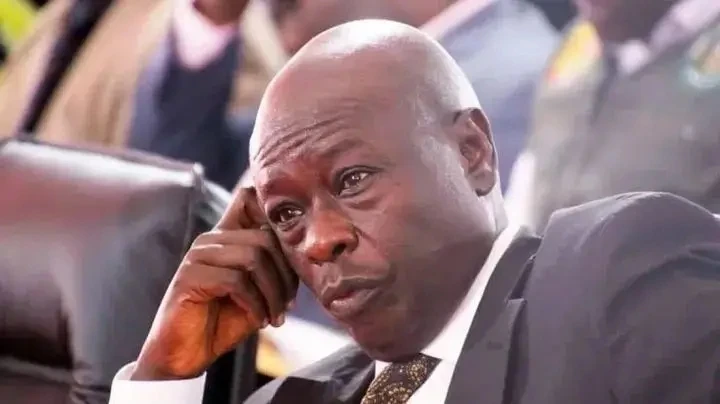
Former Deputy President Rigathi Gachagua suffered a major legal setback on Monday after the High Court upheld his impeachment, ruling that Parliament acted within the Constitution in removing him from office.

In a highly anticipated judgement, the three-judge bench dismissed Gachagua's petition challenging his ouster, finding that both the National Assembly and the Senate followed the law and afforded him an adequate opportunity to defend himself against the charges.
The judges further held that the public participation undertaken before the impeachment met the required constitutional threshold and that Parliament was entitled to exercise its oversight role over state officers.
The ruling effectively closes one of the most contentious political chapters in recent Kenyan history and cements Gachagua's removal from office.
In the consolidated petitions challenging the October 2024 impeachment of former Deputy President Rigathi Gachagua, the High Court bench comprising Justices Eric Ogola, Anthony Mrima, and Freda Mugambi delivered a landmark verdict focusing on several core constitutional and procedural issues:
Legality of the High Court Bench: Whether the Deputy Chief Justice had the constitutional authority to empanel the three-judge bench that initially lifted the conservatory orders and allowed the impeachment to proceed.
Constitutionality of the Impeachment: Whether the Senate and National Assembly followed the legal and constitutional threshold required to remove a senior state officer from office.
Adequacy of Public Participation: Whether the public participation process conducted across the country prior to the impeachment was legally sufficient and met constitutional thresholds.
Right to a Fair Hearing: Whether Gachagua was afforded a fair hearing and procedural justice during the parliamentary proceedings leading to his removal.
Appointment of the Successor: The legal status and legitimacy of the appointment of his successor, Kithure Kindiki, particularly without the direct involvement of the IEBC in the process.
Consequential Remedies: What happens to the practical legal effects of the impeachment—including damages, potential reinstatement, and the avoidance of a constitutional crisis—should the court nullify the parliamentary ouster?
Judge Ogola: No evidence of bias, predetermination or conflict of interest
The High Court found no evidence to support allegations of bias, predetermination or conflict of interest in the impeachment proceedings against former Deputy President Rigathi Gachagua.
"On allegations of bias, the allegations of bias, predetermination and conflict of interest advanced against the speakers, MPs and senators are unsubstantiated. They rest on political inference and suspicion rather than objective evidence capable of satisfying the required threshold."
In dismissing the claims, Justice Eric Ogola, delivering the judgement on behalf of a three-judge bench, held that political participation and expression of views by legislators cannot, on their own, amount to constitutional bias.
"The mere fact that members supported or opposed the impeachment of His Excellency Gachagua cannot, standing alone, establish constitutional bias," the court stated.
The judge emphasised that impeachment is an inherently political-constitutional process in which lawmakers are not expected to approach proceedings without prior knowledge or political opinion.
"Legislators are not expected to approach impeachment as blank slates, devoid of political opinion or prior knowledge," Ogola noted.
What is required under the Constitution, the court said, is not the absence of political inclination but the presence of good faith engagement with evidence and arguments during the process.
"What the Constitution requires is that they remain genuinely open to considering the evidence, listening to argument, and discharging their constitutional responsibilities in good faith and within constitutional limits," the judge said.
On that basis, the court rejected the petitioners’ allegations that lawmakers had predetermined the outcome or were influenced by conflict of interest, finding that such claims were not supported by material evidence.
"We therefore find that the allegations of bias, predetermination and conflict of interest advanced by the petitioners against the Speakers, Members of Parliament and Senators are, on the material before this Court, no more than bare and unsubstantiated assertions grounded in political inference and suspicion rather than in objective evidence," Justice Ogola ruled.
The court underscored that constitutional standards cannot be lowered to require absolute neutrality in thought or political affiliation among elected representatives engaged in impeachment proceedings. Instead, the legal threshold is whether the process allowed fair consideration of evidence and whether decision-makers acted within constitutional bounds.
In addressing the broader constitutional framework, the bench further held that impeachment proceedings are justiciable and subject to judicial scrutiny where constitutional violations are alleged.
"We find that the impeachment proceedings challenged in these petitions are justiciable and that this Court possesses jurisdiction under Articles 23, 22 and 165 of the Constitution to determine whether the National Assembly and the Senate acted within constitutional bounds," Ogola stated.
However, the court clarified the limits of its mandate, stressing that it does not sit as a political body to determine the merits or sufficiency of impeachment charges.
"We reiterate that the court is not a political arbiter but a constitutional one," the judge said.
Justice Ogola added that while courts may review the legality of the process, they cannot substitute Parliament’s political judgment with their own assessment of the seriousness of allegations.
"We agree in principle with the submission that it is not the function of this Court to determine whether the charges against His Excellency Gachagua were of sufficient gravity to warrant his removal from office," he observed.
The court further reaffirmed that separation of powers must be understood in harmony with constitutional accountability, not as a barrier to judicial oversight.
"The separation of powers does not mean separation from the Constitution," Ogola concluded, reinforcing the judiciary’s role in safeguarding constitutional compliance while respecting the institutional roles of Parliament.
Court: Parliament conducted proper public participation
The High Court upheld the legitimacy of the public participation process conducted by the National Assembly during the impeachment proceedings against former Deputy President Rigathi Gachagua, ruling that it met the required constitutional standards.
In its judgement, the bench found that while large-scale national processes may encounter logistical and operational challenges, such issues do not, on their own, invalidate an otherwise lawful exercise.
“It is to be expected, even accepting, as we do, that logistical and operational challenges may have a reason in certain isolated cases, which is not an uncommon occurrence in any large-scale, nationally coordinated exercise conducted under time pressure; such localised deficiencies would not invalidate the entire process,” the court held.
The judges concluded that the evidence presented demonstrated that the exercise was conducted openly and in good faith.
“The evidence before this court shows that the door was opened widely, accessibly, and in good faith,” the bench stated.
On claims that the process was flawed because the former Deputy President’s response to the charges was not made publicly available during the public participation window, the court dismissed the argument.
The court also clarified the nature of public participation in impeachment proceedings, distinguishing it from a courtroom trial.
“The fact that His Excellency Gachagua’s response to the charges was not available to the public during the window does not render the exercise deficient,” the judgement read.
“The purpose of public participation in the impeachment process is substantively and functionally distinct from the adversarial hearing to which the respondent is entitled. It was not and was never intended to be a mini trial of the charges.”
The bench held that the National Assembly and Senate acted within their constitutional mandate as representative institutions, making final determinations on impeachment matters.
The Constitution vests the final decision-making authority in the National Assembly and the Senate, both of which are representative bodies exercising a delegated mandate from the people,” the court stated.
On compliance with prior court orders requiring constituency-level engagement, the judges found that Parliament had taken demonstrable and timely steps to implement the directives, including structured nationwide public hearings and collection of views through constituency offices.
The court further dismissed claims that the participation process was merely a procedural facade, citing documentary evidence, constituency reports, and supporting materials presented by the National Assembly.
It also rejected allegations of statistical anomalies in participation data, stating that the figures were mathematically sound and within acceptable limits.
Court: Kindiki nomination process as DP was open, transparent and constitutional
The High Court has upheld the process through which Kithure Kindiki was nominated and approved as Deputy President, finding that the proceedings were conducted in an open, transparent and constitutionally compliant manner.
Delivering the judgement on behalf of a three-judge bench, Justice Freda Mugambi held that the parliamentary process did not violate constitutional requirements on public participation.
The bench noted that the nature of the decision fell within a category of legislative action where openness and accountability, rather than public hearings, are determinative.
“Public participation, the purpose of which is to inform the narrative and policy of citizen-orientated public decision-making, would add nothing of constitutional value to a binary vote of this character,” the court stated.
The bench further observed that even where the concept of public participation is broadly interpreted, the circumstances surrounding the nomination and approval of the Deputy President nominee did not require a structured public engagement process.
The court instead emphasised that the proceedings in the National Assembly met the constitutional threshold through openness, accessibility and institutional transparency.
“We do find that the proceedings of the National Assembly on the nomination of His Excellency Kindiki were conducted in a fully open and transparent manner,” Justice Mugambi said.
According to the court, the debate on the nomination was conducted in public view, with multiple safeguards ensuring accountability.
Members of the public, the judge said, were able to follow the proceedings through live broadcasts, while official parliamentary records captured the full debate.
“The debate was televised, the proceedings were recorded in Hansard, the press was free to report, and members of Parliament were directly accountable to their constituents for the manner in which they exercised their votes,” the judgement noted.
The bench held that such openness satisfied the constitutional expectation that Parliament conducts its business transparently under Article 118(1)(a), which requires legislative bodies to ensure that their proceedings are conducted in an open manner.
“We are therefore satisfied that this openness and transparency, which is the constitutional core of Article 118(1)(a)’s requirement that Parliament conducts its business in an open manner, was amply satisfied,” Justice Mugambi stated.
The court further clarified that not all parliamentary decisions automatically trigger the requirement for direct public participation, particularly where the decision involves a vote within the National Assembly acting within its constitutional mandate.
In this case, the judges found that the approval of the Deputy President nominee was a structured parliamentary vote rather than a policy-formulating process requiring public consultation.
“For the foregoing reasons, we hold that public participation was not constitutionally required for the nomination and approval of His Excellency Kindiki as Deputy President under Article 149(1),” the court ruled.
The decision effectively dismissed arguments challenging the legality of Kindiki’s approval process, with the court affirming that Parliament acted within its constitutional authority.
The verdict was welcomed by allies of President William Ruto, who said it vindicated Parliament's decision and reaffirmed the principle of accountability in public office.
Gachagua had asked the court to declare that his impeachment by Parliament was unconstitutional, unlawful and therefore null and void.
In his petition, he argued that both the National Assembly and the Senate violated the Constitution and failed to accord him a fair hearing during the impeachment process.
Gachagua sought orders quashing the resolutions passed by the National Assembly and the Senate that led to his removal from office.
He also wanted the court to find that the public participation conducted before his impeachment did not meet the constitutional threshold and that the proceedings were rushed in a manner that denied him due process.
Initially, Gachagua sought reinstatement as Deputy President, but he later abandoned that request.
Instead, he asked the court to award him compensation for the losses he suffered as a result of the impeachment. This included salaries, benefits and other entitlements he would have earned had he served the remainder of his term.
The former Deputy President further sought general and special damages, maintaining that his removal from office was unlawful and had caused him financial and reputational harm.
His legal team argued that the impeachment process violated his constitutional rights and urged the court to declare the entire exercise invalid.
At the heart of the case was Gachagua's contention that the impeachment failed to meet constitutional standards of fairness, public participation and due process and that he should therefore be compensated for the consequences of what he termed an unlawful ouster from office.
Gachagua was impeached in October 2024 after both the National Assembly and the Senate upheld charges against him in a historic process that made him the first Deputy President in Kenya to be removed from office through impeachment.
MPs overwhelmingly voted in favour of the motion before it was forwarded to the Senate for trial.
Following a two-day hearing, the Senate found that several of the allegations against Gachagua had been substantiated and voted to uphold his impeachment.
The charges against Gachagua included allegations of gross violation of the Constitution, abuse of office, undermining the authority of the Cabinet and the President, promoting ethnically divisive politics, and engaging in conduct deemed incompatible with the office of the Deputy President.
He was also accused of accumulating unexplained wealth through companies linked to him and his family, claims he consistently denied.
During the proceedings, Gachagua argued that the accusations were politically motivated and intended to force him out of office.
His legal team maintained that the process violated his constitutional rights and that he had not been given a fair opportunity to defend himself.
Despite these objections, the Senate upheld key charges, paving the way for his removal from office.
Following the impeachment, then Interior Cabinet Secretary Kithure Kindiki was nominated and subsequently approved to succeed Gachagua as Deputy President.
What's Your Reaction?
 Like
0
Like
0
 Dislike
0
Dislike
0
 Love
0
Love
0
 Funny
0
Funny
0
 Wow
0
Wow
0
 Sad
0
Sad
0
 Angry
0
Angry
0













Comments (0)