
Ruto: Africa has enough capital, restrictive rules blocking investment

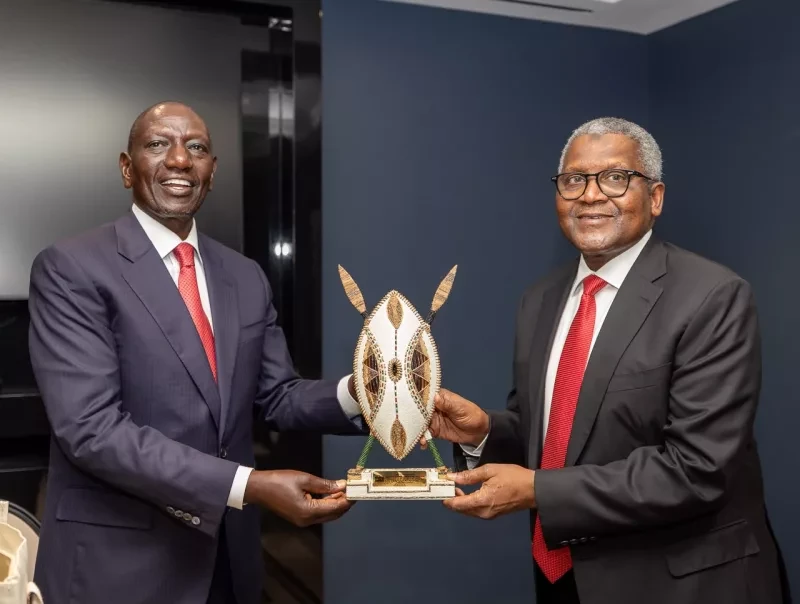
President William Ruto has said Africa’s challenge is not a shortage of capital but restrictive rules that prevent available funds from being invested in productive projects across the continent.

Ruto said Africa has more than $2 trillion in domestic non-bank capital pools, including over $1 trillion held in pension and insurance assets.
Speaking at the Africa We Build High-Level Roundtable on the sidelines of the 81st United Nations General Assembly in New York, Ruto said the continent must reform its financial and regulatory systems to unlock the capital.
Ruto questioned why African pension funds continue to invest heavily outside the continent while critical infrastructure projects at home struggle to attract long-term financing.
“Africa’s problem is no longer the amount of capital available to it. Africa’s problem is the set of rules that decide where that capital is allowed to go. Why do African pension funds prefer US Treasuries over African power plants?” he asked.
He also questioned the cost of insurance for productive assets on the continent, saying high insurance costs can make viable projects difficult to finance.
Ruto said African countries also face risk premiums that may not accurately reflect their actual default and recovery records.
The President called for African risk to be priced using African data, arguing that better risk assessment could reduce the cost of capital on the continent.
Ruto cited a UNDP estimate that more objective credit ratings could save African countries up to $74.5 billion.
The President also called for reforms to prudential and liquidity rules that he said penalise long-term investment.
He argued that regulatory rules should not treat a 30-year African investment as an exotic asset simply because of its long-term nature.
He said Africa must also strengthen the financial infrastructure needed to turn available capital into actual investments, including bankable project pipelines, credit enhancement mechanisms and local-currency financing instruments.
He said Kenya’s pension industry has assets worth about Sh3.2 trillion, with 46 per cent invested in government securities and only 0.02 per cent in infrastructure debt.
Ruto said the imbalance means that for every shilling invested in infrastructure debt, nearly Sh2,000 is invested in government paper.
He gave the example of a teacher in Eldoret whose pension contributions could ultimately finance Treasury bills rather than a geothermal plant located closer to home.
The President said Kenya was willing to serve as a test case for reforms aimed at changing how African risk is assessed.
He said the country was prepared to open its default and recovery data and make pension and insurance regulators available to rating agencies, insurers and international standard-setting bodies.
“If the evidence vindicates the methodology, we accept it. If it does not, then we expect the methodology to change,” he said.
Ruto also cited several recent measures by Kenya to mobilise private and institutional capital for infrastructure.
He said the National Infrastructure Fund, signed into law in March, is designed to mobilise up to $40 billion for roads, ports, power and water projects through equity rather than additional public debt.
He also cited the listing of Kenya’s first infrastructure fund on the Nairobi Securities Exchange, which raised Sh3.4 billion with support from the United Kingdom.
Ruto said Kenya had also increased its equity in the Africa Finance Corporation by Sh3.25 billion ($25 million) and agreed to host the corporation’s regional office in Nairobi.
He proposed the creation of a working group based in Nairobi to examine the barriers to financing African infrastructure and report its findings at the next Africa We Build Summit.
The working group, he said, should produce quantified findings within 12 months.
Ruto said Africa must urgently address its financing constraints as the continent prepares to build the infrastructure needed to support a population projected to approach 2.5 billion by 2050.
“Our goal should be simple: to make financing productive African assets ordinary, not heroic,” he said.
What's Your Reaction?
 Like
0
Like
0
 Dislike
0
Dislike
0
 Love
0
Love
0
 Funny
0
Funny
0
 Wow
0
Wow
0
 Sad
0
Sad
0
 Angry
0
Angry
0













Comments (0)