Ruto defends record in fourth State of the Nation Address ahead of 2027

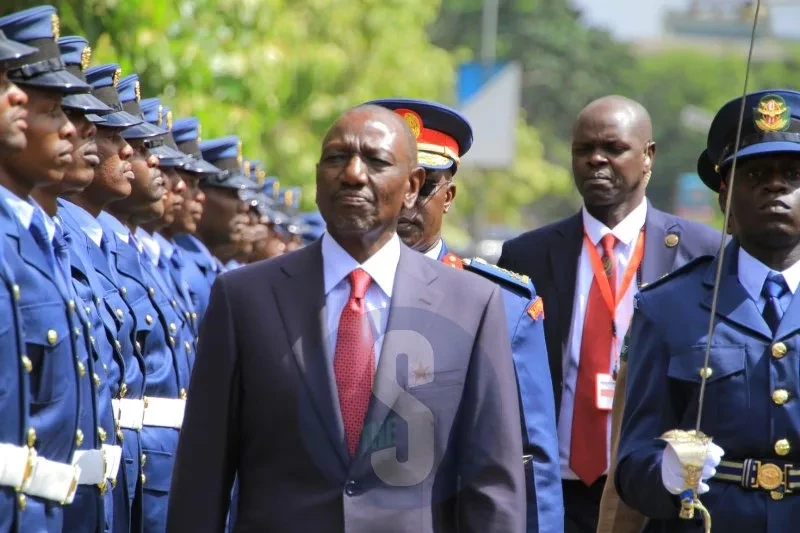
President William Ruto's fourth State of the Nation Address stood out as a defining moment in his presidency, giving him an opportunity to defend his administration's record, ahead of the 2027 general election.

Unlike his previous addresses, which largely focused on explaining policy decisions, responding to public discontent and setting out development priorities, Wednesday's address carried the weight of an administration entering its final year before Kenyans return to the ballot.
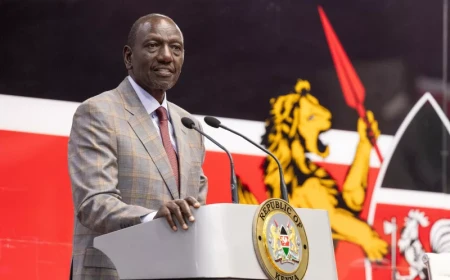
Opening his address before a joint sitting of Parliament, Ruto declared that he had never been prouder of the country or the privilege of serving as its President.
"For the fourth time, I stand before this House to discharge my constitutional duty to report on the state of the nation and take stock of what we have collectively accomplished as Kenyans," he said.
The President used the occasion to paint an optimistic picture of the country's direction, insisting that Kenya was recovering economically and making progress across key sectors.
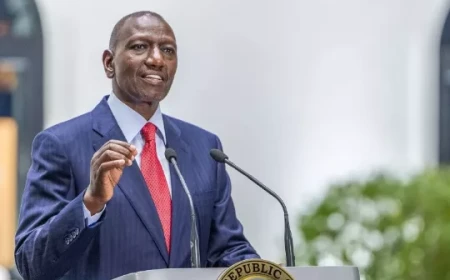
"Our nation is making a powerful comeback. Our economy is recovering, infrastructure is expanding, our education system is being revitalised, and new opportunities are opening for our young people to work, earn and prosper," he said.
He described his ambition as building a country where every citizen has an opportunity to succeed regardless of their background or economic circumstances.
"My greatest ambition, the dream of building a nation where every citizen counts, every community belongs, and no Kenyan is left behind is steadily taking shape," Ruto said.
He added that his vision was to create a Kenya "where opportunity is not determined by where you were born, or how much you have".
The President attributed the progress to deliberate policy decisions, reforms and the resilience of Kenyans, rather than coincidence.
"This progress has not happened by chance. It is the product of deliberate choices, difficult decisions, sustained reforms and the extraordinary resilience and enterprise of the Kenyan people," he said.
He identified the Bottom-Up Economic Transformation Agenda (BETA) as the foundation of his administration's development record.
The address was particularly significant because it offered Ruto an opportunity to assess the promises he made when he took office in 2022 against the realities facing Kenyans, including the cost of living, taxation, unemployment and access to essential public services.
It also came at a time when the political environment was increasingly being shaped by the 2027 succession contest, with the Opposition seeking to consolidate its ranks and challenge his re-election bid.
Ruto's first State of the Nation Address was delivered on November 9, 2023, barely a year after he assumed office.
The address was dominated by the high cost of living, rising taxation and public discontent over economic hardships, with the President seeking to convince Kenyans that his administration's policies would eventually deliver economic recovery.
On agriculture, he reported that the government had reduced fertiliser prices from Sh6,500 to Sh2,500, expanded maize acreage by 200,000 acres and increased production by 18 million bags.
In healthcare, he cited the deployment of 100,000 community health promoters and the passage of four healthcare laws. He also defended the affordable housing programme as a means of addressing the country's housing deficit while creating employment.
In education, he reported the recruitment of 56,750 teachers, presenting the initiative as part of efforts to address staffing shortages and improve learning outcomes.
A year later, Ruto's November 21, 2024 address came against a significantly different political backdrop following the Gen Z-led protests that shook his administration and forced him to reconsider aspects of his governing approach.
The President acknowledged citizens' constitutional right to peaceful demonstrations and the importance of listening to public concerns.
He nevertheless defended his economic transformation agenda, pointing to progress in digitising government services, improving revenue collection and enhancing service delivery through e-Citizen.
He reported that more than 20,800 government services had been digitised.
The address also featured a renewed commitment to fighting corruption, with Ruto directing the cancellation of the JKIA expansion and Kenya Electricity Transmission Company (KETRACO) transmission line public-private partnership contracts.
By November 20, 2025, when he delivered his third address, Ruto had shifted his focus towards four major development priorities that he said would drive the country's next phase of growth.
These were education, transport and logistics, energy, and irrigation.
He highlighted increased funding for education, teacher recruitment and reforms in the sector, while promising greater investment in infrastructure and energy to support industrialisation, create employment and accelerate economic growth.
The address also served as a three-year performance review of his administration, with the President seeking to demonstrate progress in implementing his campaign pledges while outlining the development roadmap towards 2027.
What's Your Reaction?
 Like
0
 Dislike
0
 Love
0
 Funny
0
 Wow
0
 Sad
0
 Angry
0









Comments (0)