
Ruto: Gen Z protests were a call to be heard, not an assault on democracy

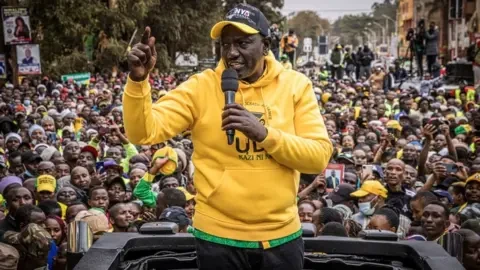
President William Ruto has defended the right of Kenyans to protest, saying peaceful demonstrations and dissent are essential to democracy, while warning that constitutional freedoms do not extend to violence, looting or destruction of property.

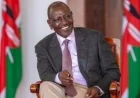
Speaking at the 16th Katiba Day Symposium at the Kenyatta International Convention Centre (KICC) in Nairobi on August 27, 2026, Ruto reflected on the Gen Z-led protests of 2024 and the constitutional questions they raised about the balance between citizens’ rights and the State’s duty to maintain order.
“During the protests of 2024 and those that followed, young Kenyans and other citizens exercised their constitutional freedoms to speak, assemble, demonstrate, picket and petition public authorities,” Ruto said.
He said the protests were driven by demands for greater accountability, better government and a meaningful role in shaping the country’s future.
“Their message was clear: they wanted to be heard,” he said.
The 2024 protests erupted in June after the government tabled a Finance Bill proposing new taxes on everyday essentials. The demonstrations were largely driven by young Kenyans who had used social media platforms including TikTok, X and Instagram to organise nationwide protests.
The protests intensified after Parliament passed the Bill on June 25, when demonstrators stormed the building. The demonstrations broadened from opposition to the tax proposals to wider demands for accountability and an end to police brutality. Ruto eventually withdrew the legislation.
At the Katiba Day event, Ruto said the demands made during the protests should not be treated as an attack on democracy.
“Those demands were not an assault on democracy. Peaceful protest, criticism, and dissent are essential to democracy,” he said.
He, however, said the protests also posed a difficult constitutional question on how to protect the right to demonstrate while maintaining constitutional order.
Ruto cited Article 37 of the Constitution, which protects the right of every person, peaceably and unarmed, to assemble, demonstrate, picket and present petitions to public authorities.
“That protection must be real,” he said, adding that no Kenyan should lose their life, liberty or dignity for criticising the Government, expressing an unpopular opinion or taking part in a peaceful demonstration.
The President also acknowledged the pain left by the events of the period, saying some families lost loved ones and that serious allegations had been made concerning unlawful arrests, enforced disappearances and excessive use of lethal force.
We cannot honour the Constitution by looking away from such allegations,” Ruto said.
He called for every credible allegation of a human-rights violation to be investigated independently, thoroughly and transparently. He said those found responsible for wrongdoing should be held accountable in accordance with the law.
At the same time, Ruto said defending peaceful protesters did not mean excusing criminal acts carried out during demonstrations.
“The Constitution protects peaceful and unarmed assembly. It does not protect arson, looting, lawlessness, violence, intimidation, attacks on citizens or the destruction of public and private property,” he said.
He urged Kenyans to distinguish between citizens exercising constitutional rights and individuals committing criminal offences.
“We must neither criminalise an entire protest because of the actions of a few nor legitimise criminal conduct merely because it occurs in the course of a protest,” Ruto said.
He said rights and responsibilities should be treated as complementary, with each helping preserve the conditions needed for citizens to enjoy their freedoms.
“The right to protest carries a responsibility to remain peaceful and unarmed,” he said.
Ruto also said the government had a responsibility to listen, while those exercising the freedom to disagree had a responsibility to preserve democratic institutions.
“Government belongs to the people. Parliament belongs to the people. The courts belong to the people. The institutions of the Republic belong to the people,” he said.
He said the country’s task was not to choose between liberty and order, but to build an order founded on liberty while ensuring that liberty preserves constitutional order.
“Our national task is, therefore, not to choose between liberty and order. It is to build an order founded on liberty and to exercise liberty in a manner that preserves the constitutional order,” he said.
What's Your Reaction?
 Like
0
Like
0
 Dislike
0
Dislike
0
 Love
0
Love
0
 Funny
0
Funny
0
 Wow
0
Wow
0
 Sad
0
Sad
0
 Angry
0
Angry
0











Comments (0)