
Kenya confirms third Ebola case as 127 contacts placed in quarantine

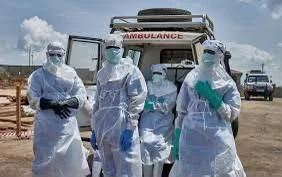
Kenya has confirmed a third case of Ebola (Bundibugyo virus disease), involving a 65-year-old woman who had been in quarantine since October 6, as health authorities intensify surveillance to contain the outbreak.

The Ministry of Health said Friday, October 16, that the woman was a primary contact and close relative of the first and second patients.
She developed a fever, sore throat and malaise while in quarantine, prompting her isolation and testing.
Her samples tested positive at both the National Virology Reference Laboratory and the Kenya Medical Research Institute (KEMRI) laboratory.
She has since been transferred to the Infectious Disease Unit, where she is receiving supportive care from trained health workers.
“Having been in quarantine, she was diagnosed early and is currently receiving supportive care, improving her chances of recovery while limiting the risk of further spread of the disease,” Director General for Health Patrick Amoth said in a statement.
The ministry said the second patient remained stable and was responding well to supportive care, adding that updates on the progress of all reported cases would be provided.
Authorities said the latest case was detected within the quarantine system, allowing health workers to identify and isolate the patient before further exposure could occur.
The ministry maintained that the risk to the general public remained low, with no evidence of community transmission.
Of the 130 contacts identified by health officials, 127, representing 97.7 per cent, had been traced and placed in quarantine by October 16. Efforts were ongoing to locate the remaining three contacts.
The ministry said the tracing rate was above the global benchmark of 85 per cent considered necessary to help break the chain of transmission.
“Cases among quarantined contacts are possible until their monitoring ends; if they occur, they will be detected and treated just as quickly,” the ministry said.
To strengthen preparedness, the government has distributed personal protective equipment, infection prevention and control supplies and public health screening equipment to 28 high-risk counties and points of entry.
Travellers arriving from 10 high-risk countries will also be required to complete a digital surveillance form before boarding their flights and present a QR code to port health officers upon arrival.
All aircraft arriving from these countries are undergoing enhanced public health screening at Kenyan international airports.
The ministry said 685,027 people had been screened cumulatively by October 15 since the outbreak began in May 2026.
Despite the outbreak, the government said the country remained open for business, with no restrictions imposed on travel, trade or public gatherings.
Ebola spreads through direct contact with the blood or body fluids of an infected or deceased person, rather than through the air.
The ministry urged anyone experiencing fever, unusual tiredness, muscle or joint pain, vomiting, diarrhoea or unexplained bleeding to seek immediate medical attention.
What's Your Reaction?
 Like
1
Like
1
 Dislike
1
Dislike
1
 Love
0
Love
0
 Funny
0
Funny
0
 Wow
0
Wow
0
 Sad
0
Sad
0
 Angry
0
Angry
0
















Comments (0)