
365 days without Raila: Everything that happened since October 15, 2025

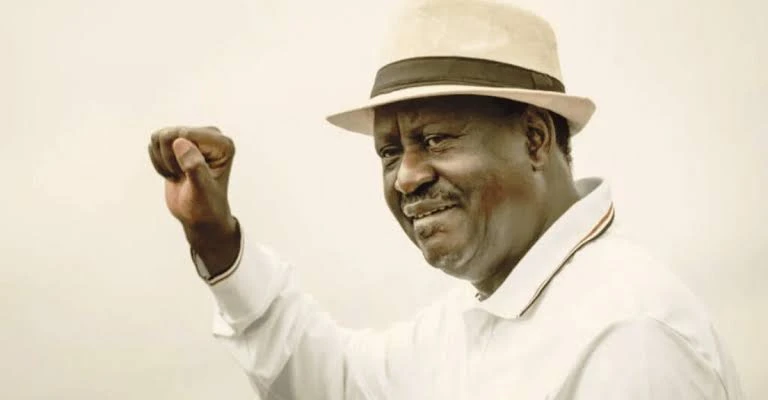
A year after former Prime Minister Raila Odinga's death, the political landscape he shaped for decades is still adjusting to his absence, with his family navigating political differences, the Orange Democratic Movement (ODM) managing its future and plans taking shape to preserve his legacy.
Raila, who died on October 15, 2025, while receiving treatment in India, was 80. His death marked the end of an era in Kenyan politics, leaving behind a party he founded, a family thrust into the public spotlight and millions of supporters who regarded him as a symbol of the country's democratic struggle.
His final journey began with the return of his body to Kenya for public viewing at Parliament Buildings. On October 17, 2025, thousands of mourners gathered at Nyayo National Stadium in Nairobi for his state funeral. His body was later taken to Kisumu for another public viewing before he was buried at his family home in Bondo, Siaya County, on October 19.
The family said the burial arrangements followed his wish to be laid to rest within 72 hours of his death. In the months that followed, attention turned to the future of ODM, the political party Raila had led for years.
His brother, Siaya Senator Oburu Oginga, took over as party leader as questions emerged over the party's direction and how it would maintain its political influence without its founding figure. The transition also brought differences into the open within the Odinga family and the party over political strategy and the role of the younger generation.
On January 23, 2026, President Ruto nominated Ida Betty Odinga to serve as Kenya’s Ambassador and Permanent Representative to the United Nations Environment Programme (UNEP), headquartered in Nairobi.
The nomination was forwarded to Parliament for consideration and approval, Ida replaced Ababu Namwamba, who had been reassigned as Kenya’s Ambassador to Uganda.
The nomination came three months after the death of her husband. Ida is an educationist and civic leader who has campaigned for women’s empowerment, education and social justice.
In January 2026, Raila's daughter, Winnie Odinga, called for ODM to return to its reformist roots and give young people a greater role in decision-making. Her position came amid discussions within the party about its political alliances and future direction.
Her brother, Raila Odinga Junior, called for dialogue amid the disagreements. He said he had reached out to his uncle, Oburu, to request a family meeting, while distancing himself from political disputes.
“I'm not a politician. I love everyone and respect everyone,” he said.
By May, Junior was again urging political leaders to respect his family amid the wrangles within ODM. The disagreements had emerged only months after his father's death.
On February 11, 2026, ODM removed Nairobi Senator Edwin Sifuna as the party’s Secretary-General following a meeting of its National Executive Committee (NEC) in Mombasa.
The party said the decision took immediate effect and appointed Deputy Secretary-General Catherine Omanyo to act in the position.
In a statement, the NEC said it had deliberated on matters concerning Sifuna’s conduct and resolved to remove him in accordance with the party constitution and applicable laws.
The decision marked a significant development in ODM's leadership following Raila's death, as disagreements over the party's direction continued.
The family's political future also became a subject of discussion ahead of the 2027 General Election.
In August, Junior declared his interest in the Kibra parliamentary seat, which his father represented for more than two decades.
His mother, Ida, backed his plans and asked Kibra leaders to guide and mentor him as he prepared for the political journey.
While the political discussions continued, plans were also underway to establish a permanent memorial in Raila's honour.
In July 2026, construction began on a mausoleum at Kang'o ka Jaramogi, his ancestral home in Bondo. The facility was intended to preserve his memory and provide a place where supporters could reflect on his life and contribution to the country.
In September, the Odinga family announced the formation of a committee to coordinate the first anniversary commemorations. The family said many supporters had not had an opportunity to mourn Raila or say goodbye in the manner they would have wished.
The committee was tasked with coordinating activities that would bring together Kenyans from different communities and generations to remember his life.
In October, ODM announced a month-long programme dubbed “Mwezi wa Baba” to mark one year since his death. The activities included nationwide candle-lighting events and planned gatherings in different parts of the country.
On October 7, President William Ruto commissioned the Raila Odinga Mausoleum at Kang'o ka Jaramogi. In his tribute, Ruto described Raila as “the father and guardian of our democracy”, recognising his contribution to the country's political development.
The anniversary programme is scheduled to culminate in a memorial service in Bondo on October 15, followed by other activities across the country.
As the first anniversary approaches, the family and ODM face the task of preserving Raila's legacy while navigating political differences and questions about the future.
One year after his death, the commemorations offer an opportunity to reflect on his political journey, the changes within his party and the family decisions shaping how he will be remembered.
What's Your Reaction?
 Like
0
Like
0
 Dislike
0
Dislike
0
 Love
0
Love
0
 Funny
0
Funny
0
 Wow
0
Wow
0
 Sad
0
Sad
0
 Angry
0
Angry
0


Comments (0)