
EAC states commit to strengthen education systems, improve learning outcomes

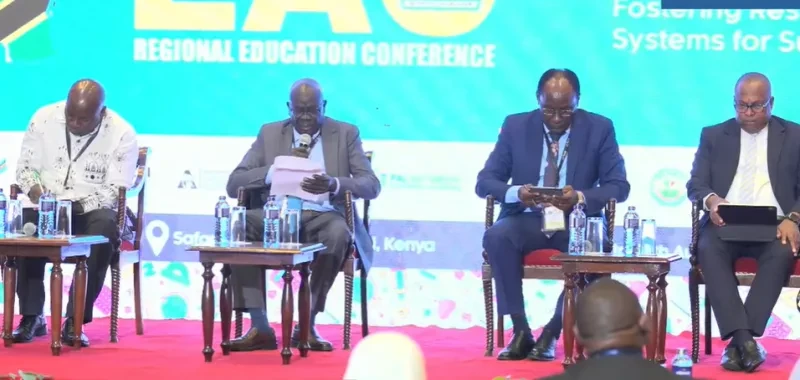
East African Community (EAC) partner states have committed to strengthening education systems, improving learning outcomes and increasing investment in teachers, skills and equity as the region seeks to close persistent education gaps.

The commitment was made during the second EAC Regional Conference on Education held at Safari Park Hotel in Nairobi, which brought together more than 600 education leaders, policymakers and stakeholders from the bloc’s eight partner states.
The four-day conference, held under the theme “Transforming Education in East Africa: From Commitments to Impact, Fostering Resilience and Future-Ready Systems for Sustainable Development”, focused on persistent learning gaps, unequal access to education, skills mismatches and mounting pressure on education systems.
A major concern was the region’s reliance on external financing for education amid shifting global funding priorities, with delegates calling for stronger domestic and regional financing mechanisms to sustain investment across the education cycle.
The conference also placed emphasis on teacher education and professional development, with calls for greater harmonisation of education policies, curricula and qualifications to facilitate the movement of teachers, learners and skills across the region.
Cabinet Secretary for East African Community and Arid and Semi-Arid Lands, Beatrice Askul Moe, who represented President William Ruto at the opening, called for greater investment in teacher education, professional development and better working conditions.
She said education systems should become more interoperable as regional integration deepens, allowing learners to move between partner states without disruption to their education.
Calls were made for stronger regional cooperation and harmonisation of education systems, education policies, curricula and qualifications to facilitate learner and skills mobility while ensuring that education systems respond to the region’s shared development priorities.
The conference also highlighted the need to move towards a more integrated regional teaching profession, with teacher qualifications and training systems made more compatible across partner states.
Delegates said such harmonisation would help address barriers that currently make it difficult for students and skilled professionals to move across the region in pursuit of education and employment
At the technical and vocational level, the EAC said the regional TVET Qualifications Framework has been developed and is awaiting approval.
Once adopted, the framework is expected to support greater recognition of qualifications, skills mobility and closer alignment between training and the regional labour market.
The bloc is also advancing the East African Common Higher Education and Research Area, with emphasis on harmonisation, innovation, partnerships and the mobility of knowledge and skilled graduates.
The conference further called for stronger links between education, research and policymaking, alongside better regional education data to support evidence-based decisions.
Foundational learning emerged as another priority, with Tanzania’s Minister for Education, Science and Technology, Adolf Mkenda, stressing the need to strengthen the foundations of learning while continuing to invest in teachers, quality education and skills development.
Other priority areas included inclusive education, digitalisation and innovation, stronger links between education and industry, sustainable education financing and governance, and the use of technology and artificial intelligence to build resilient, future-ready education systems.
The conference reviewed progress made since the inaugural regional education conference held in Arusha, Tanzania, in 2024 and sought to identify gaps requiring greater political, technical and financial commitment. opportunities.
The EAC said the latest conference is expected to produce practical policy recommendations and implementation actions, including agreed commitments, priority initiatives, timelines and next steps.
Progress on the commitments will be assessed at the next regional education conference in 2028.
What's Your Reaction?
 Like
0
Like
0
 Dislike
0
Dislike
0
 Love
0
Love
0
 Funny
0
Funny
0
 Wow
0
Wow
0
 Sad
0
Sad
0
 Angry
0
Angry
0
















Comments (0)