
Ex-LSK president Faith Odhiambo questions logic of Gachagua impeachment ruling

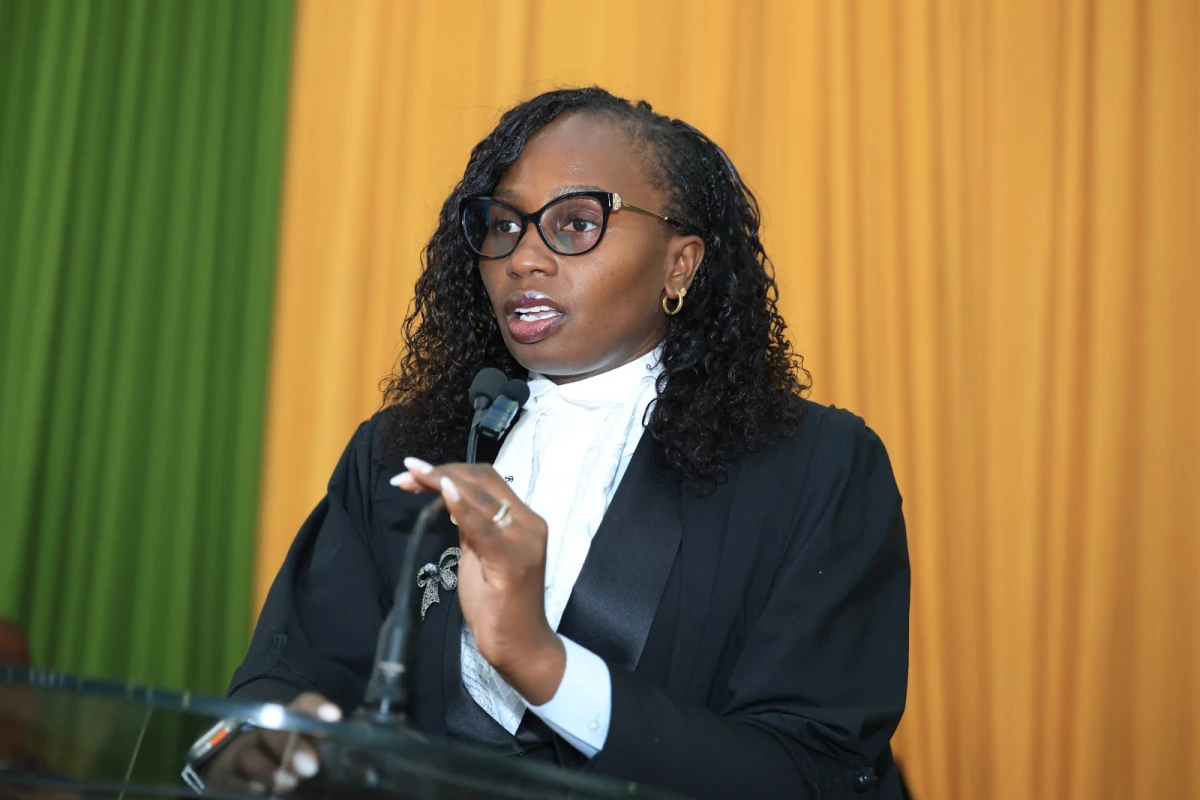
Former Law Society of Kenya President Faith Odhiambo has said the High Court judgment on the impeachment of former Deputy President Rigathi Gachagua raises serious constitutional questions that require deeper reflection on Kenya’s remedial framework.

In her assessment of the ruling, Odhiambo noted that the three-judge bench found that Gachagua’s right to a fair hearing under Article 50 of the Constitution was violated when the Senate declined to grant an adjournment during the impeachment proceedings.
She observed that while the court acknowledged the violation and awarded Sh50 million in constitutional damages, it nonetheless upheld the outcome of the impeachment.
Odhiambo said the decision presents a legal tension that must be addressed with clarity, particularly on whether a proven breach of fair hearing rights can stand alongside a final removal from office.
“The court acknowledged that violation, issued a declaratory order and awarded Sh50 million in constitutional damages. Yet the bench ultimately upheld the impeachment itself. I respect the court and the constitutional role it plays. But I believe this outcome calls for serious reflection on the coherence of our remedial framework,” she said.
She said the right to a fair hearing is a substantive constitutional safeguard, not a procedural formality, especially in proceedings that result in the removal of a high-ranking public official.
According to her, courts must clearly explain how constitutional violations are reconciled with remedies that do not alter the outcome of a case.
“Courts must therefore grapple carefully with what it means to vindicate a right while simultaneously affirming the outcome that flowed from its violation. It is a difficult balance, and I appreciate that the bench was navigating complicated constitutional terrain,” she said.
Odhiambo drew a comparison with the Supreme Court’s 2017 presidential election petition, where the election was nullified due to procedural and constitutional irregularities that compromised the integrity of the process.
She argued that while the two cases are not identical, the principle that constitutional violations must have meaningful consequences remains central to public law.
Odhiambo further cautioned that the ruling could shape future impeachment proceedings if constitutional violations are routinely addressed through monetary damages without affecting substantive outcomes.
She urged Parliament to urgently enact a clear legal framework under Article 150 of the Constitution to guide the removal of a Deputy President, noting that the current legislative gap creates uncertainty in high-stakes constitutional processes.
“Yesterday, a violation of the right to a fair hearing was found, remedied in damages but the result was preserved. These are not necessarily irreconcilable positions; courts do have discretion in fashioning remedies, but the distinction must be clearly reasoned and transparently justified because the precedent being set will govern how future impeachments are conducted and how future courts respond to violations within those processes,” she said.
My concern is about the precedent this decision may establish. If a constitutional violation during impeachment proceedings can be remedied by damages without disturbing the outcome, future Parliaments and Senates may not feel the full weight of their constitutional obligations when handling removal proceedings.”
Odhiambo said a constitutional democracy is built on the integrity of its processes and not merely its outcomes.
What's Your Reaction?
 Like
0
Like
0
 Dislike
0
Dislike
0
 Love
0
Love
0
 Funny
0
Funny
0
 Wow
0
Wow
0
 Sad
0
Sad
0
 Angry
0
Angry
0













Comments (0)