
Orengo factor: Internal democracy or spoiler bid in Linda Mwananchi?

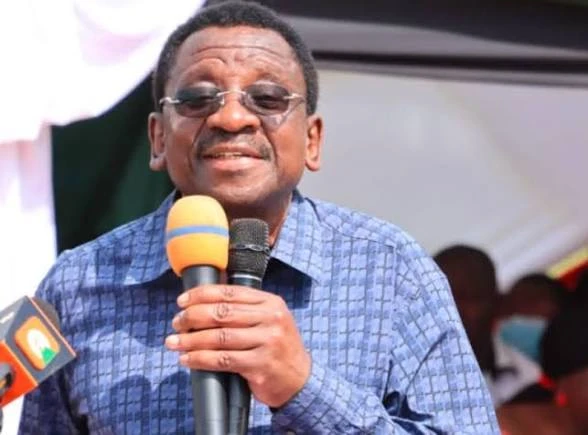
Nairobi Senator Edwin Sifuna has emerged as the de facto leader of the Linda Mwananchi faction and its presumptive presidential flag bearer, with supporters increasingly rallying behind him under the “Sisi ni Sifuna” catchphrase.

Sifuna has positioned himself as a formidable challenger to President William Ruto in the 2027 General Election, riding on his growing national profile and seeking to consolidate opposition support behind his presidential ambition.
His bid has been helped by his efforts to inherit former ODM leader Raila Odinga’s traditional support base in Nyanza and parts of Western Kenya, even as shifting political alliances create a crowded field of leaders seeking to position themselves for the presidency.
With less than two months before the IEBC electoral timetable begins to bind political parties in October, political manoeuvring within the opposition has intensified, with leaders increasingly taking hardline positions and alliances beginning to take shape.
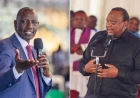
It is against this backdrop that Siaya Governor James Orengo, who had initially indicated support for Sifuna’s presidential bid, has emerged as a competing voice within Linda Mwananchi.
Orengo has now declared himself a serious contender for the presidency, raising questions about whether his move represents a genuine exercise of internal democracy or a potentially disruptive bid that could complicate Sifuna’s ambitions.
“From today, know that I’m the presidential candidate, a serious presidential candidate,” Orengo said during a burial ceremony in Oyugis town, Homa Bay county, on August 29.
The senior counsel invoked the Luo community’s historical role in the struggle for independence and the restoration of multi-party democracy, arguing that its members deserve an opportunity to lead the country.
In a subsequent television interview, Orengo defended his declaration as a legitimate expression of internal democracy, dismissing suggestions that he was seeking to undermine Sifuna.
His intervention, however, has exposed an emerging fault line within Linda Mwananchi at a time when the opposition formation is still seeking to establish itself as a cohesive political vehicle ahead of the 2027 elections.
Critics fear that a contested nomination process could trigger friction, fragment the movement or produce rival camps, particularly as Linda Mwananchi is yet to acquire the full rights associated with registration as a political party.
Embakasi East MP Babu Owino, who was present when Orengo made his declaration, cautioned opposition leaders against creating divisions within the movement and made clear his preference for Sifuna.
Speaking during a rally in Meru on August 30, Babu argued that opposition leaders needed to remain united, saying no single political formation could successfully capture the presidency on its own.
“I’m with you 100 per cent,” Babu said, in reference to the movement’s preferred candidate.
His position was echoed by other Linda Mwananchi leaders at the rally.
“So from today, we don’t want confusion,” said Kabuchai MP Majimbo Kalasinga.
Orengo, however, has dismissed the suggestion that he is merely seeking to spoil Sifuna’s presidential bid.
He has instead pointed to the 2002 opposition alliance, when several political principals entered the race for the presidency before rallying behind a single candidate, as evidence that competing ambitions do not necessarily prevent an eventual consensus.
“All the principals of the 2002 Pentagon that produced a single presidential candidate and ended Kanu’s 24-year reign were all presidential candidates,” Orengo said.
“So, those who raise these fears are not democrats, and I can tell you if you don’t allow a process of internal democracy, then the case becomes very difficult to achieve unity,” he told Citizen TV on August 31.
The argument raises the question of how Linda Mwananchi will waver the competing ambitions and pick its presidential candidate amidst the emerging contest.
ADVERTISEMENT
Sifuna has maintained a muted stance and has not publicly responded to concerns over how the movement will manage competing internal ambitions.
Orengo’s declaration has nevertheless made the contest within the faction increasingly visible.
For some political analysts, the development is evidence that Linda Mwananchi lacks a clearly defined mechanism for resolving competing ambitions.
They warn that without an agreed nomination or consensus-building process, the movement could splinter into competing sub-factions before the 2027 contest.
Some have also questioned the viability of Orengo’s presidential ambition, arguing that his entry into the race could have little impact on the final outcome and suggesting that his political experience would be better utilised in an advisory role.
Ugenya MP David Ochieng, while acknowledging Orengo’s seniority in Kenyan politics, said his generation had largely moved out of frontline electoral politics.
“I have been hearing Orengo saying he is the senior-most politician in the country. That is true,” Ochieng said during a fundraiser at St Anne’s Sega Catholic Church grounds on August 31.
“Orengo was in the scene with the likes of Mukhisa Kituyi, Gitobu Imanyara, Kiraitu Murungi, Musikari Kombo and Martin Shikuku,” he said.
But the scepticism surrounding Orengo’s bid has not eliminated the possibility that his declaration could serve a broader political purpose.
ODM chairperson Gladys Wanga has dismissed the ambition, arguing that a credible presidential campaign requires years of nationwide mobilisation, networks and logistical preparation.
In her view, Orengo’s declaration has come too late to mount a serious campaign capable of dislodging an incumbent president.
Other analysts, however, see a more calculated strategy. They argue that the presidential declaration could serve two purposes: strengthening Orengo’s position within his political base while increasing his bargaining power in negotiations over the eventual opposition presidential ticket.
Under this interpretation, Orengo’s candidacy need not necessarily end with his name on the ballot.
His entry into the contest could instead give him leverage in the negotiations that will ultimately determine who carries the opposition mantle.
That possibility makes the Orengo factor more consequential than the size of his presidential support might suggest.
For Linda Mwananchi, the immediate challenge is therefore not simply deciding between Sifuna and Orengo.
It is demonstrating that the movement can accommodate competing ambitions without allowing them to fracture the coalition before the real battle against Ruto begins.
While Orengo insists that internal competition is democracy at work, his critics fear it could become the seed of division.
How Linda Mwananchi resolves that contradiction could determine whether its current momentum develops into a credible national political force — or dissolves into another opposition alliance undone by competing ambitions.
What's Your Reaction?
 Like
0
Like
0
 Dislike
0
Dislike
0
 Love
0
Love
0
 Funny
0
Funny
0
 Wow
0
Wow
0
 Sad
0
Sad
0
 Angry
0
Angry
0










Comments (0)