
BREAKING NEWS: Yoweri Museveni Wins 7th Term as Uganda President
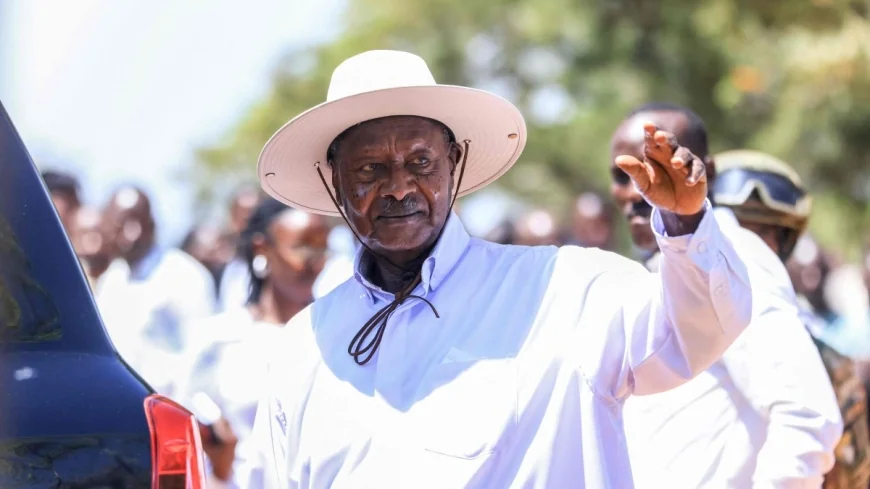
Veteran President Yoweri Kaguta Museveni has been declared the winner of Uganda’s January 15, 2026, presidential election, extending his remarkable hold on power to a seventh term.

Museveni’s projected victory underscores his continued dominance of Ugandan politics, a tenure that stretches back four decades and makes him one of Africa’s longest‑serving leaders
The Electoral Commission announced provisional results showing Museveni’s National Resistance Movement (NRM) comfortably ahead of challengers, although opposition figures have decried the process as flawed. Final certified results are expected to follow, amid sustained scrutiny from civil society and international observers.
From guerrilla commander to president
Yoweri Museveni first rose to national prominence as the leader of the National Resistance Army (NRA), a rebel movement that waged a five‑year guerrilla war against Milton Obote’s government and its successor.
In January 1986, Museveni seized power and effectively ended years of political violence in the East African nation. His initial years in office focused on stabilising the economy and ending protracted insurgencies, particularly in the north of the country.
Under the 1995 Constitution, Uganda established a framework for multiparty democracy and set presidential term and age limits. The constitution set a two‑term cap for presidents, with additional age thresholds requiring candidates to be at least 35 years old and no older than 75. Yet, political developments in subsequent years altered that framework significantly.
Elections through the years
1996: First competitive election
Museveni first subjected himself to a popular election in 1996, a year after the promulgation of the new constitution. He won the presidency with about 74 per cent of the vote, defeating Paul Kawanga Ssemogerere, the candidate from the Democratic Party. This election was widely seen as a milestone, testing Uganda’s constitutional democracy after years of conflict.
2001 and the removal of term limit
In 2001, Museveni was re‑elected for a second term, securing roughly 69 per cent of the vote against challenger Kizza Besigye. At that time, the constitutional two‑term limit was still in place but poised to be reviewed.
By 2005, Parliament controversially voted to scrap presidential term limits, effectively allowing Museveni to stand again. The move was justified by the ruling party as a tool for continuity but was widely criticised by opposition groups and civil society for undermining democratic checks and balances.
2006, 2011 and 2016 elections
After term limits were removed, Museveni secured a third term in 2006. He went on to win again in 2011 and 2016, each time defeating Besigye and other challengers.
2017: Age limit removed
A key turning point came ahead of the 2021 elections. In 2017, Parliament amended the constitution to remove the presidential age limit, which had capped eligibility at 75 years. This amendment was seen by many analysts and critics as tailored to allow Museveni — then in his 70s — to further extend his stay in office. The removal of the age cap was passed amid heated debate and was widely condemned by opposition figures and constitutional experts.
2021: Tough challenge, continued rule
In the 2021 election, Museveni faced his strongest challenger yet: Robert Kyagulanyi Ssentamu, better known as Bobi Wine, a musician‑turned‑politician whose youth appeal galvanised significant segments of the population.
Museveni won with about 58 per cent of the vote, while Bobi Wine captured around 35 per cent, a reflection of both deepening dissatisfaction and the entrenched power of the ruling NRM.
The vote was accompanied by significant allegations of fraud, voter intimidation, and restricted civil liberties, although the government rejected these claims.
Election 2026: A seventh term
The 2026 election, which Museveni now leads, took place against a backdrop of intense political pressure. In the weeks leading up to January 15, authorities imposed a nationwide internet blackout, and rights organisations faced suspension orders, restrictions, and alleged intimidation by security forces. The United Nations and several international rights groups documented an environment of repression and arbitrary detention during the campaign period.
Despite the contentious climate, Museveni’s NRM maintained organisational advantage and broad rural support, which helped propel his campaign forward.
Opposition leaders, including Bobi Wine, challenged both campaign conditions and electoral procedures, raising concerns about openness and fairness.
Museveni justified the controversial shutdown of Uganda’s internet, insisting it was a temporary and necessary step to protect national security and public order.
Speaking to Sky News in Kampala, Museveni dismissed claims that the blackout was meant to stifle dissent or silence the country’s predominantly young electorate.
“We are the ones who built it,” he said, referring to the internet, and explained that the shutdown was aimed at thwarting criminals who, in his view, sought to use digital platforms to destabilise the nation.
“It is temporary, short-term, but like any road closure, it is to prevent chaos,” he added.
Constitutional changes and democratic debate
Museveni’s long tenure has been enabled by constitutional changes that altered the democratic landscape in Uganda. Removing term limits in 2005 and later scrapping the age limit in 2017 effectively opened the door for indefinite presidential bids.
These changes have been criticised by many Ugandans, who argue that curtailing mechanisms designed to check executive power weakens democratic governance and accountability.
Supporters of Museveni argue that his extended leadership has provided stability and continuity following decades of conflict. They note progress in economic development, improvements in infrastructure, health, and security.
Detractors counter that political repression and reduced civic space have overshadowed these achievements, stifling dissent and weakening institutions meant to safeguard democratic competition.
What this victory means for Uganda
If confirmed, Museveni’s seventh term means he will have led Uganda for more than 40 years, a remarkable span in modern African political history. His presidency will continue to shape regional and continental politics, particularly in security and economic initiatives, where Kampala plays an active role.
Yet, the 2026 result also intensifies debates over leadership succession, political reform, and the future of democratic practice in Uganda. Questions about how and when a peaceful transfer of power might occur have gained traction, especially among younger Ugandans who have known only one leader since childhood
Looking ahead
As Museveni prepares to be inaugurated for another term, the international community is expected to watch closely how the government handles the transition of power within its institutions. Key issues include addressing allegations of irregularities, strengthening electoral credibility, and creating inclusive spaces for political participation. For many Ugandans, whether this term will mark the final chapter of the Museveni era, or merely another step in an extended presidency, remains central to national discourse.
What's Your Reaction?
 Like
0
Like
0
 Dislike
0
Dislike
0
 Love
0
Love
0
 Funny
0
Funny
0
 Wow
0
Wow
0
 Sad
0
Sad
0
 Angry
0
Angry
0

I am a passionate blogger tech enthusiast and founder of 8T8 Media a digital platform dedicated to sharing tech insights news updates and thought-provoking content. My journey into blogging began with a love for writing and a deep interest in how technology shapes our lives. Over time I expanded my focus to include not just tech but also political news current affairs and updates across fields like business education and lifestyle. Through 8T8 Media I aim to keep my audience informed with relevant and timely content that reflects real issues and developments around us. I break down complex tech topics into easy reads and share important news stories that matter to individuals and communities. My approach is rooted in authenticity consistency and a genuine desire to empower others with information. I believe that blogging is more than just writing it's about connecting people to knowledge ideas and opportunities. Whether you're into gadgets tech trends or just want to stay updated on what's happening around you my content is created to engage inform and inspire. 8T8 Media is my way of contributing to a more informed digital world and I'm proud to use my voice to share stories that matter.








Comments (0)