
Karua Accuses Government of Smuggling Rejected 2024 Finance Bill Back Into Law Through the Backdoor

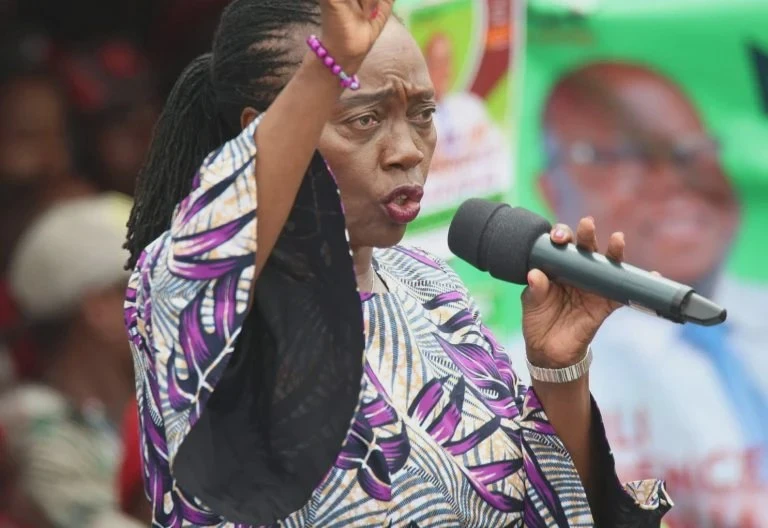
People’s Liberation Party (PLP) leader Martha Karua has accused the Treasury CS John Mbadi of reintroducing provisions from the rejected Finance Bill 2024 through the current Finance Bill 2026, warning that the move could place a heavier burden on ordinary Kenyans.

Speaking during a media interview on Wednesday, June 3, Karua said several clauses in the new bill mirror those that were previously opposed by citizens, arguing that the proposals remain punitive and disproportionately affect vulnerable groups.
She alleged that despite public rejection of the earlier bill, similar tax measures are now being “returned through the backdoor,” raising concerns about transparency in the fiscal reform process.
“The same measures rejected by the Gen Z and which caused the death and injuries of so many are the same things they are returning through the backdoor,” she said.
Karua also criticised increased allocations to the Office of the President, saying government spending priorities appear skewed in favour of luxury and administrative expansion while citizens continue to shoulder rising tax obligations.
She further raised concern over proposed taxes linked to digital services, including mobile money transactions and online platforms, warning that such costs would ultimately be transferred to consumers and increase the cost of everyday financial activities.
In response to similar concerns, Treasury Cabinet Secretary John Mbadi has defended the bill, dismissing claims of new taxes on key sectors such as cryptocurrency, bread, digital content creation, and mobile money transfers.
He has maintained that the proposed framework is aimed at broadening the tax base and improving revenue collection efficiency rather than introducing excessive new levies.
Comparisons between the 2024 and 2026 Finance Bills show overlapping themes, particularly in digital taxation, financial services regulation, and expanded access to transaction data for tax enforcement purposes, although the government insists the structures differ.
The Finance Bill 2026 is currently undergoing parliamentary scrutiny, with the Finance and National Planning Committee reviewing submissions from stakeholders and members of the public before tabling its report in the National Assembly for further debate.
What's Your Reaction?
 Like
0
Like
0
 Dislike
0
Dislike
0
 Love
0
Love
0
 Funny
0
Funny
0
 Wow
0
Wow
0
 Sad
0
Sad
0
 Angry
0
Angry
0
















Comments (0)